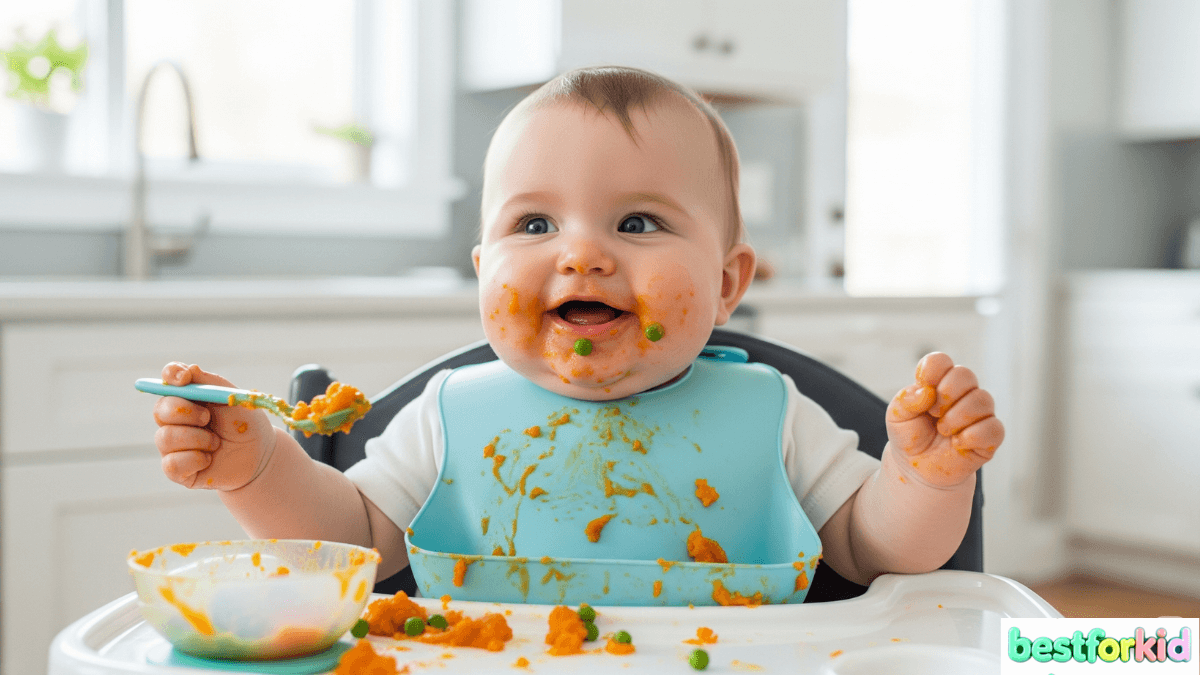

Welcome, new parents, to an exciting milestone. Starting solid foods is a big step for your baby. A well-structured 6-month baby food chart can be your guide. This guide is for Indian parents. It considers our foods and culture. We will cover everything you need to know. From the first bite to a balanced diet. This is about building healthy eating habits. Let’s start this flavourful journey together.
The Big Milestone: When to Start Solid Foods?
The move to solid foods is a key growth phase. This process is often called weaning. The World Health Organization (WHO) suggests starting solids around six months. At this age, milk alone may not be enough. But every baby is unique and develops differently. Age is just a guideline. Look for developmental signs of readiness. Starting solids depends on your baby’s growth.
Key Signs Your Baby is Ready for Solids
Your baby will show clear signs of readiness. Look for these signs appearing together. This usually happens around six months:
- Good Head and Neck Control: Your baby can sit with support. They can hold their head steady. This is vital for safe swallowing.
- Loss of Tongue-Thrust Reflex: The reflex to push food out fades. They can move food to the back of their mouth.
- Shows Interest in Food: Your baby watches you eat. They may reach for your food. They open their mouth for food.
- Hand-Eye-Mouth Coordination: They can see food, pick it up, and bring it to their mouth.
Common Misconceptions About Readiness
Parents may misread some baby behaviors. It is important to know the real signs. The following are not readiness signs:
- Chewing on fists: This is a common self-soothing action.
- Waking up more at night: Sleep patterns change for many reasons. It is not always about hunger for solids.
- Wanting extra milk feeds: This is often a sign of a growth spurt. More milk is usually the right response.
Starting solids too early can be frustrating. Patience is very important.
Why Wait Until 6 Months? The Science Behind Weaning
Waiting until six months is recommended for health reasons. For the first six months, milk provides all nutrients. Solids complement milk feeds, not replace them.
Here’s why six months is the ideal time:
-
- Digestive System Maturity: A baby’s digestive system is still developing. It may not handle complex foods well before six months.
- Reduced Risk of Illness: Exclusive breastfeeding protects against infections. It provides important antibodies.
- Developmental Readiness: Babies have the physical skills to eat solids safely. This reduces the risk of choking.
- Sufficient Iron Stores: Babies’ iron stores start to decrease around six months. Iron-rich foods are crucial to prevent deficiency.
A Golden Rule for Indian Parents: The "One Food at a Time" Principle
Follow one main rule when starting solids. Introduce only one new food at a time. Wait for three to five days before adding another. This is called the “3-day rule.” It helps identify potential food allergies. If a rash or other symptoms appear, you can find the cause.
Start with single-ingredient purees. Avoid mixing foods at first. For example, offer only apple puree for a few days. Then introduce carrot puree. This method keeps your baby’s transition safe. Consult your pediatrician about any suspected allergy.
Your Baby's First Foods: A Gentle Introduction (6-Month Baby Food Chart Essentials)
India has many fresh, natural foods for babies. Start with easy-to-digest and low-allergen foods. Prepare them as a smooth, soupy puree. Do not add salt, sugar, or honey. A baby’s kidneys cannot handle salt. Sugar can create unhealthy taste habits. Honey can cause infant botulism, a serious illness.
Fruits to Begin With
Fruits are a great first food. They are naturally sweet and have vitamins. Cook and puree fruits to a smooth consistency.
- Apple (Seb): Steamed and pureed, it’s easy to digest.
- Banana (Kela): Rich in potassium, it can be mashed.
- Pear (Nashpati): Gentle on the tummy, cook and puree.
- Avocado (Makhanphal): Rich in healthy fats, can be mashed.
- Papaya (Papita): Ripe papaya is soft and easily mashed.
Vegetables for a Healthy Start
Vegetables offer different flavors and nutrients. Steam or boil them until very soft, then puree.
- Carrot (Gajar): Rich in Vitamin A, with a sweet taste.
- Sweet Potato (Shakarkandi): A good source of vitamins and fiber.
- Pumpkin (Kaddu): Easy to digest and rich in vitamins.
- Potato (Aloo): A staple, can be boiled and mashed.
Comforting Cereals and Pulses
Cereals and pulses are great first foods. They are a core part of the Indian diet.
- Rice (Chawal): Rice water or thin porridge is traditional.
- Moong Dal: Yellow moong dal is light and protein-rich. Start with dal soup.
- Ragi (Nachni/Finger Millet): A superfood rich in calcium and iron.
Crafting the Perfect 6-Month Baby Food Chart: A Week-by-Week Guide
Here is a sample 6-month baby food chart. This is a flexible guide. Customize it based on your baby’s preferences. One solid meal a day is enough to start. You can increase to two meals later. Breast milk or formula is still the main nutrition source.
Week 1: The First Tastes
Introduce eating from a spoon this week. Start with 1-2 teaspoons once a day.
- Day 1-3: Apple Puree (1-2 tsp)
- Day 4-6: Carrot Puree (1-2 tsp)
- Day 7: Banana Mash (1-2 tsp)
Week 2: Expanding the Palate
Continue with single-ingredient purees. You can offer food twice a day now.
- Morning: Pear Puree (2-3 tsp)
- Afternoon: Sweet Potato Puree (2-3 tsp)
- Foods to introduce this week: Pear, Sweet Potato, Pumpkin.
Week 3: Introducing Pulses and Cereals
Introduce traditional staples like rice and dal.
- Morning: Fruit Puree (e.g., Papaya mash) (1-2 tbsp)
- Afternoon: Moong Dal Soup (Dal ka Paani) (1-2 tbsp) or Rice Porridge (1-2 tbsp)
- Foods to introduce this week: Moong Dal, Rice, Ragi Porridge.
Week 4: Combining Flavours and Increasing Texture
Try simple combinations if tolerated well. You can also make purees slightly thicker.
- Morning: Apple and Ragi Porridge (2-3 tbsp)
- Afternoon: Carrot and Moong Dal Khichdi (well-mashed) (2-3 tbsp)
- Foods to introduce this week: Simple combinations like Apple-Cinnamon Puree.
How Much Food is Enough for a 6-Month-Old?
Follow your baby’s lead. Eating solids is about exploration now. Milk is still their main source of calories.
Start with one or two teaspoons a day. Increase the amount as their appetite grows. A typical portion is 2 to 4 tablespoons. This is just an estimate.
Look for signs of fullness. If your baby turns away, they are full. Never force your baby to eat more. Trust their internal hunger cues.
Essential Indian Baby Food Recipes for 6-Month-Olds
Homemade baby food is the healthiest choice. It is fresh, nutritious, and preservative-free. Here are five simple recipes to start.
Apple Puree (Seb ka Puree)
A classic first food, apple puree is gentle.
- Peel, core, and chop one medium apple.
- Steam the apple pieces for 10-12 minutes.
- Blend into a smooth puree. Add water or milk for consistency.
Carrot Puree (Gajar ka Puree)
This puree is packed with Vitamin A.
- Wash, peel, and chop one medium carrot.
- Steam the carrot for 15-20 minutes until soft.
- Blend to a smooth consistency with water.
Moong Dal Soup (Dal ka Paani)
A protein-rich and comforting Indian food.
- Wash 2 tablespoons of yellow moong dal.
- Pressure cook the dal with 1 cup of water.
- Strain the cooked dal to collect the liquid.
- Later, you can mash the dal itself.
Rice Porridge (Chawal ka Paani)
An easy-to-digest source of carbohydrates.
- Wash 2 tablespoons of rice.
- Cook the rice with 1 cup of water until very soft.
- Mash the rice and add milk or water.
Ragi Porridge (Nachni Satva)
A nutritious powerhouse rich in calcium.
- Mix 1 tablespoon of ragi flour with water.
- Add this paste to a pan with 1/2 cup of water.
- Cook on low heat, stirring continuously.
- Let it cool before feeding.
Preparing Food Safely: Hygiene and Best Practices
Your baby’s immune system is still developing. Strict hygiene is crucial.
The Importance of Sterilization
Always wash your hands before preparing food. Ensure all utensils are washed and sterilized. You can boil utensils in water for 5-10 minutes.
Cooking Methods
Steaming is one of the best cooking methods. It helps retain the most nutrients. Pressure cooking is also a good option.
Food Consistency
Food should be a smooth, runny puree at first. Gradually make the texture thicker as your baby grows.
Foods to Strictly Avoid
Some foods are unsafe for babies under one.
- Salt and Sugar: Avoid completely.
- Honey: Can cause infant botulism.
- Cow’s Milk: Not as a main drink until after one year.
- Nuts and Choking Hazards: Avoid whole nuts, seeds, and hard foods.
- Eggs and Fish: Consult your pediatrician first.
Weaning Woes and How to Overcome Them
Starting solids can have some challenges. It is normal to face a few issues.
When Your Baby Refuses Food
It can take many tries for a baby to accept new food. Do not be discouraged if they refuse something. Stay calm and try again another day.
Gagging vs. Choking
Gagging is a normal reflex to prevent choking. Choking is silent and when the airway is blocked. Always supervise your baby during meals.
Constipation After Starting Solids
Bowel movements can change with solids. If your baby is constipated, offer more fluids. Foods like pear and plum puree can help. Avoid bananas and rice for a while.
Beyond the Food: Making Mealtimes a Happy Experience
Mealtimes should be a positive experience. Create a calm and happy atmosphere. Establish a routine in a high chair. Turn off the TV and minimize distractions. Let your baby explore their food. Eating together as a family can help.
The Role of Breast Milk and Formula
Solid foods are complementary in the first year. The main nutrition source is still breast milk or formula. A 6-month-old may drink 700-950 ml of formula. Or breastfeed 5-8 times in 24 hours. Continue to offer milk feeds on demand.
Conclusion
Starting solids is a journey of discovery. This 6-month baby food chart is a guide. Be flexible and listen to your baby’s cues. Embrace the mess and celebrate small wins. By offering homemade Indian foods, you are building healthy habits. Enjoy this beautiful and messy milestone.
Frequently Asked Questions (FAQs)
Can I give my 6-month-old water?
Yes, you can offer small sips of cooled, boiled water with meals. This helps with digestion. Water should not replace milk feeds.
When can I introduce non-vegetarian food?
You can introduce pureed meats like chicken or fish from 6 months. They are good sources of iron. Always consult your pediatrician first.
Can I add salt or sugar to my baby’s food?
No. Do not add salt or sugar before one year. A baby’s kidneys cannot handle added salt. Sugar can lead to unhealthy food preferences.
How do I store homemade baby food?
Store in airtight containers in the fridge for 2-3 days. You can also freeze purees in ice cube trays for up to 3 months.
What are the signs of a food allergy?
Common signs are skin rashes, vomiting, or swelling. If you see these, stop the new food and call your doctor.
Is it okay to use packaged baby food?
Homemade is best as it’s fresh and controlled. Packaged food can be convenient. Read labels to avoid added sugar or salt.
Can I give my baby finger foods at 6 months?
Some parents use baby-led weaning with soft finger foods. Ensure foods are soft enough to mash. Always supervise your baby closely.
How many meals a day should a 6-month-old have?
Start with one solid meal a day. You can increase to two meals as they get closer to 7 months.
You May Also Like

2025’s Best Baby Diapers in India Every Parent Should Know
Finding the right diaper can be a game-changer for both parents and babies. In this guide, we’ve rounded up the best baby diapers in India for 2025 that offer superior comfort, absorbency, and skin protection. Whether you’re looking for budget-friendly options or premium brands, this list helps you make the right choice for your little one’s needs.

Newborn Clothing Made Easy: Comfort Meets Practicality
Dressing your newborn doesn’t have to be complicated. This guide simplifies your shopping by focusing on clothes that are soft, breathable, and easy to wear. Discover top picks for rompers, onesies, and sleepwear that combine comfort with convenience—perfect for your baby’s delicate skin and your daily routine.

10 Best Baby Play Mats for Comfort, Safety & Entertainment
A good play mat offers more than just a soft surface—it encourages sensory development, tummy time, and safe play. We’ve curated the best baby play mats of 2025 that tick all the boxes: comfort, safety, durability, and design. Explore options that turn your floor into a fun and nurturing environment for your baby.